Steve Camp has Died
Today, I saw the news that Steve Camp had died.
It hit me hard.
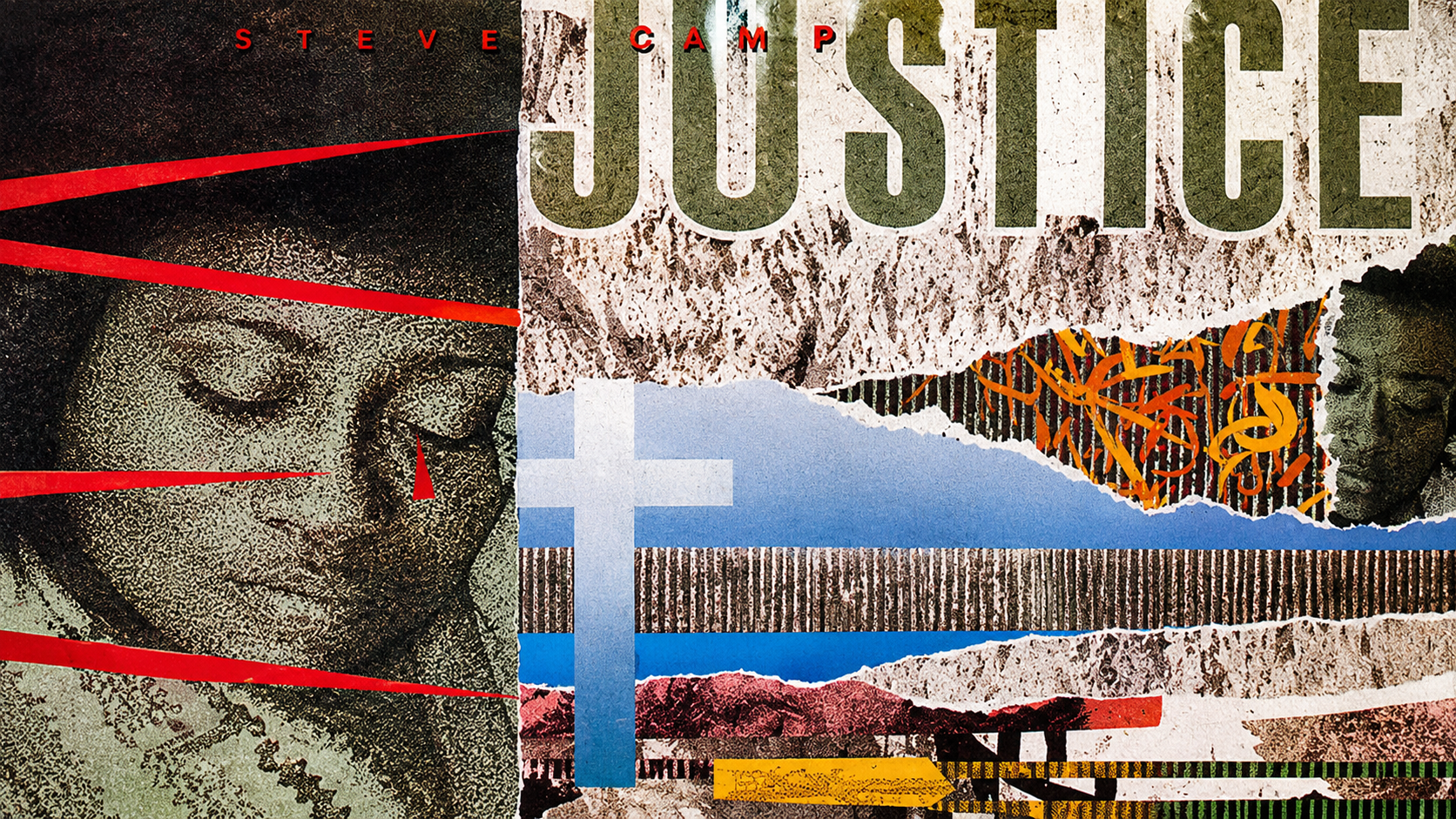
Immediately, my mind went back to 1988. I was a teenager, still a relatively new Christian, walking into the Bible bookstore on Butternut Street in Abilene, Texas. I was looking through the new releases in Christian music when an album caught my attention.
Steve Camp. Justice.
I had no idea what that album would come to mean to me. I had no idea that almost forty years later, I would be sitting here writing about how that record helped shape the Christian I would become.
The album absolutely blew me away.
This wasn’t the generic Christian music that offered some shallow encouragement, telling me everything was going to be all right. It wasn’t an album filled with songs attacking the world, condemning everyone outside the church, and reminding Christians how much better we were than everyone else.
No. This album came right for the church.
No holds barred.
It confronted racism. It challenged the influence of politics on Christianity. It confronted the way Christians had treated those suffering from AIDS. It challenged the complacency, hypocrisy, and indifference that existed within the very religious community that would purchase the album.
And there I was, a teenage Christian, listening to something that was doing what I wasn’t sure Christians were supposed to do.
It was criticizing Christianity.
Not Christ. Not the gospel. Not the Scriptures. But the church, the Christian culture, and the people who claimed to represent Christ.
That distinction would become incredibly important to me.
I was learning that just because I was a Christian, I didn’t have to be on a team. I didn’t have to defend everything the church did. I didn’t have to agree with every Christian leader. I didn’t have to pretend something was right simply because Christians were doing it.
Disagreement was allowed. Questions were allowed. Challenges were allowed.
And sometimes, the people who most needed to be challenged were the people sitting in the pews, standing behind the pulpits, and producing the Christian music.
Obviously, this was already a part of who I was in many ways. But that album helped give expression to something inside of me.
And if you have ever listened to the Theology Central podcast, you know it is very much a part of who I became.
There is one song on that album that I will never forget hearing for the first time.
Do You Feel Their Pain?
I broke down and wept.
This was 1988. The AIDS epidemic was devastating lives. People were suffering, dying, being rejected by their families, and experiencing a level of fear and isolation that is difficult for many today to fully comprehend.
And much of the Christian world was more interested in making pronouncements about those people than sitting beside them.
Steve Camp asked a different question.
Did we feel their pain?
That question broke me.
It wasn’t asking whether I could win a theological argument about AIDS. It wasn’t asking whether I could identify someone’s sin. It wasn’t asking whether I could defend a particular political position or demonstrate that I held the correct moral convictions.
It was asking whether I could look at another human being who was suffering and actually care.
I wish I could adequately communicate what that song did to me as a teenager. I wish I could explain what it was like to hear it for the first time. But some experiences are difficult to put into words, even after almost forty years.
That album became the soundtrack to a large portion of my early Christian life.
Playing Marbles with Diamonds.
Don’t Tell Them Jesus Loves Them.
Living Dangerously in the Hands of God.
Hell Is Burning While the Church Sleeps.
Great American Novel.
These weren’t just songs that I enjoyed. They were songs that challenged me, disturbed me, made me think, and helped shape the way I looked at the Christian world around me.
But Steve Camp wasn’t finished.
Years later, he would do something that many people would never dream of doing. He turned his criticism toward the very industry of which he was a part.
In 1997, Steve Camp released The 107 Theses: A Call to Reformation for the Contemporary Christian Music Industry.
Yes, 107 theses.
He deliberately invoked the imagery of Martin Luther and the Protestant Reformation, but this time the target was the contemporary Christian music industry.
Think about that for a moment.
This was the industry that had given him a career. It had given him a platform, an audience, radio airplay, record sales, and recognition. He had experienced considerable success within that industry.
And now he was publicly calling it to account.
He challenged its commercialization. He challenged its priorities. He challenged the transformation of Christian ministry into entertainment and the tendency to measure success in ways that had more to do with the marketplace than the Scriptures.
It was shocking.
And in many ways, it marked the end of the Steve Camp who had been such a prominent figure in mainstream contemporary Christian music. I cannot claim to know every factor that contributed to the trajectory of his career, but I have always wondered how much his willingness to challenge the industry cost him.
What is perhaps even more disturbing is that history seems to have demonstrated how little the industry listened.
The industry kept right on being the industry.
The commercialization continued. The celebrity culture continued. The machinery of Christian entertainment continued.
But once again, Steve Camp had demonstrated something to me.
You don’t have to go along.
Even when the people you are challenging are the people who gave you your platform. Even when they are the people who purchase your records, listen to your music, or support your ministry. Even when speaking out may cost you something.
You don’t have to go along.
That lesson would once again influence the person I became and the podcast I would eventually create.
I have spent years on Theology Central questioning things that Christians are often uncomfortable questioning. I have challenged sermons, books, theological systems, Christian institutions, and the way the church handles the Scriptures.
Sometimes people have wondered why I spend so much time criticizing the church.
Why don’t I spend more time criticizing the world?
Why don’t I just offer encouragement?
Why can’t I be more positive?
Why can’t I simply go along with what everyone else is saying?
Perhaps part of the answer can be found in a Bible bookstore on Butternut Street in Abilene, Texas, in 1988.
Perhaps part of the answer can be found in a teenager who bought an album called Justice and discovered that being a Christian did not mean surrendering his ability to question, think, challenge, and disagree.
Perhaps part of the answer can be found in a song that made that teenager break down and weep.
And perhaps part of the answer can be found in 107 theses written by a man who was willing to turn his criticism toward the very industry that had made him successful.
I am not writing this to suggest that I agree with everything Steve Camp ever said, everything he ever taught, or every position he ever held. In fact, it would seem rather ironic to honor his influence on my life by pretending that I had to agree with him about everything.
That would betray one of the very lessons he helped teach me.
People will have different opinions about Steve Camp. They will have different assessments of his music, his theology, his ministry, and his legacy.
But there is something about his legacy that I know with absolute certainty.
It is a part of my life.i made
Today, I learned that Steve Camp has died. He was 71 years old.
And today, for a little while, I was that teenager again, standing in a Bible bookstore in Abilene, Texas, looking through the new releases in Christian music.
I can still see the album cover.
I can still remember hearing those songs.
I can still remember the tears.
I could not have known then how much that album would mean to me. I could not have known that decades later I would be sitting behind a microphone, challenging the Christian world in ways that would make some people uncomfortable.
But here I am.
Steve Camp has passed away.
Justice and the 107 Theses will always be a part of my life.
And every time I turn on that microphone and refuse to simply go along, perhaps a little bit of what I discovered in that Bible bookstore in 1988 lives on.
Thank you, Steve Camp.
Rest in peace.
18.5 Million Bible Readers?