Standing Before an Ocean

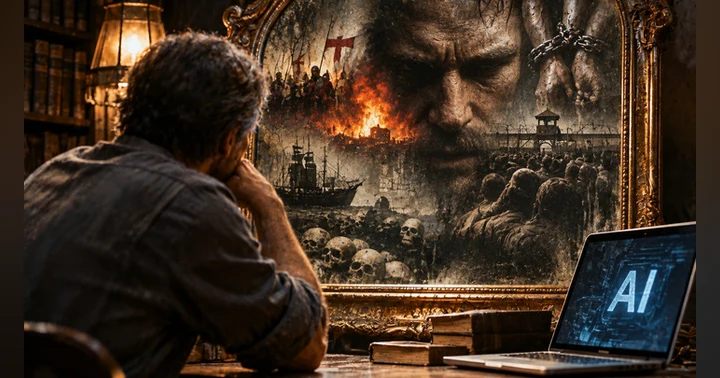
It’s approaching 11 PM on a Sunday night. I’m sitting here thinking about what has happened over the last twenty-four hours on SermonAudio, and the more I think about it, the more difficult it becomes to comprehend.
Throughout the day, churches around the world have gathered. Pastors have preached. Sunday school teachers have taught. Bible studies have taken place. Evening services have concluded. And throughout it all, recordings have been making their way onto SermonAudio.
How many? We don’t have an exact count, but it’s entirely possible that a couple of thousand sermons and teaching sessions have been added today alone.
Think about that.
If 2,500 recordings were added today, and they averaged forty-five minutes each, that would represent 1,875 hours of content. You could begin listening right now, never sleep, never stop to eat, never take a break, and you would still be listening seventy-eight days from now.
At one hour a day, it would take you more than five years.
And that would be the content from ONE Sunday.
Tomorrow morning, more recordings will be added. More on Tuesday. More on Wednesday. The process never stops.
Here we are, approaching 11 PM on a Sunday night, standing before an ocean of spiritual content. And what an incredible ocean it is.
Sunday school lessons. Sermons. Bible teaching. Seminary lectures. Bible college chapel services. Conferences. Revivals. Missionary reports. Historical recordings. Expositions of entire books of the Bible. Theological debates. Material from churches representing different denominations, theological traditions, countries, and languages.
Somewhere in that ocean is a recording that might change the way you understand a passage of Scripture you have been reading your entire life. Somewhere is a sermon that might challenge a theological position you have never seriously questioned. Somewhere is a Bible college lecture from decades ago that raises a fascinating question you have never considered. Somewhere is a preacher in a small church, virtually unknown outside his congregation, who has spent an extraordinary amount of time wrestling with a difficult biblical text.
And we may never discover any of it.
That’s one of the things that has been fascinating me tonight. Imagine how much of the content uploaded to SermonAudio this morning is already buried.
A pastor spends twenty hours studying a passage of Scripture. He works through the language, the historical background, the literary structure, the theological implications. He stands before his congregation and delivers a sermon. Someone uploads the recording to SermonAudio.
For a brief moment, there it is in Newest Sermons.
Then another sermon appears. Then another. Then fifty. Then a hundred. Then hundreds more.
By the time the pastor goes to bed tonight, the sermon he spent an entire week preparing may already be practically invisible to someone browsing the newest recordings.
It hasn’t even been available for a full day, and its moment of discovery may already be over.
We have created a remarkable system for preserving content while simultaneously creating an almost impossible challenge for discovering it.
SermonAudio has made it possible for a sermon to remain available for decades. But being available and being discovered are two very different things. A recording can be accessible to billions of people and remain virtually unknown to everyone.
That is one of the reasons I spend so much time exploring SermonAudio. I look through the newest sermons, search series, investigate broadcasters, explore archives, and look for things that might otherwise go unnoticed. Sometimes I find something absolutely fascinating. Sometimes I find something that makes me wonder how anyone arrived at that interpretation of Scripture. Sometimes I find a sermon that makes me want to get to a microphone immediately.
And sometimes I find something that makes me wonder if I should turn off my iPad and go to bed before I hear anything else!
But no matter how much time I spend exploring, no matter how many sermons I listen to, no matter how many discoveries I make, I am barely touching the surface.
That realization should produce a sense of wonder.
Instead, I think many of us have become so accustomed to the availability of all this material that we simply take it for granted. We open an app, scroll for a few minutes, see nothing that immediately captures our attention, close the app, and move on.
We are standing in front of one of the greatest collections of biblical and theological teaching ever assembled, and we treat it as casually as we treat the television listings.
But there is another side to this entire discussion, and it may be considerably more uncomfortable.
For decades, we have been hearing about the crisis of biblical illiteracy in the church.
Christians don’t know their Bibles. Christians don’t understand theology. Christians don’t know the basic doctrines of Christianity. Christians can’t explain what they believe or why they believe it.
And what is the proposed solution?
Another resource.
Another study Bible. Another devotional. Another Bible reading program. Another curriculum. Another discipleship course. Another app. Another conference. Another book.
We keep acting as if the great obstacle standing between Christians and biblical literacy is that someone has not yet produced the right resource.
Really?
It’s almost 11 PM on a Sunday night, and SermonAudio alone has approximately 3.18 million recordings available. Millions of hours of teaching, and more being added around the clock.
And that’s ONE platform.
That doesn’t include the millions of videos on YouTube, the countless Christian podcasts, the digital theological libraries, the Bible study websites, the freely available commentaries, the historical theological works, the online seminary courses, the Bible translations, the original-language resources, or the extraordinary amount of material available through modern Bible software.
We are living in an age in which a Christian sitting on a couch with an iPad can access biblical and theological material that would have been unimaginable to many of the greatest theologians in church history.
And yet, biblical illiteracy remains a crisis?
At some point, we have to acknowledge what that means.
A lack of resources cannot be the primary explanation for biblical illiteracy in a culture that is drowning in resources.
I’m not suggesting that biblical illiteracy isn’t real. I’m suggesting that we may have spent decades misdiagnosing the problem.
And perhaps one of the reasons we continue misdiagnosing it is because the proposed solution is considerably easier than confronting the actual problem.
It’s easier to publish another book than to ask why Christians aren’t reading the Bible.
It’s easier to launch another discipleship program than to ask why decades of discipleship programs haven’t produced the results we were promised.
It’s easier to produce another thousand sermons than to ask whether the sermons we are already preaching are actually teaching people how to understand Scripture.
And that last question is one the church desperately needs to confront.
What if we have spent decades producing sermon consumers rather than biblical readers?
What if we have taught Christians how to listen to someone explain a passage of Scripture without ever teaching them how to investigate the passage themselves?
What if we have taught people to memorize theological conclusions without teaching them how to examine the evidence for those conclusions?
A Christian can listen to a thousand sermons and still have no idea how to identify the historical context of a biblical book, follow the argument of a passage, recognize its literary genre, evaluate competing interpretations, or distinguish what the text actually says from what a preacher claims it says.
A Christian can attend church for thirty years and still be completely dependent upon someone standing behind a pulpit to tell them what the Bible means.
And if that is happening, we need to ask some serious questions about what we are doing in our churches.
We cannot simply blame the people in the pews for biblical illiteracy while refusing to examine the educational effectiveness of the people standing behind the pulpits.
And then there is the uncomfortable reality that not everything in this enormous ocean of content is good.
Some of it is excellent. Some of it is mediocre. Some of it is historically inaccurate, logically inconsistent, or hermeneutically indefensible. Some of it is little more than the repetition of theological traditions that have never been seriously examined.
An abundance of biblical teaching does not necessarily produce an abundance of biblical understanding. If the teaching itself is flawed, consuming more of it may simply reinforce the misunderstanding.
That is why I believe Christians need to learn how to engage with this ocean of content, not simply consume it.
Listen. Read. Investigate. Compare. Ask questions. Examine the arguments. Look at the historical evidence. Read the scholarship. Study the actual biblical text. Listen to someone from a theological tradition different from your own. Be willing to discover that something you have believed for years may not be supported by the passage you have always used to defend it.
Don’t merely ask what a sermon taught you. Ask whether the sermon demonstrated that its teaching was actually derived from Scripture.
The goal is not to see how many sermons we can listen to. The goal is not to see how many theological books we can accumulate. The goal is not to become a walking encyclopedia of Christian terminology.
The goal is understanding.
And that brings me back to where I started.
It’s almost 11 PM on a Sunday night. The newest sermons continue to appear. Somewhere, another recording is being uploaded. Another Bible lesson is being added to a series. Another historical sermon is emerging from an archive. Another preacher’s work is joining millions of other recordings.
There is something absolutely incredible about that.
I don’t want to take it for granted. I don’t want to become so overwhelmed by the sheer volume that I simply ignore it. I want to explore it. I want to discover things. I want to learn. I want to be challenged. I want to find that obscure sermon, that forgotten lecture, that unexpected interpretation, that fascinating theological discussion.
But I also want us to recognize what this extraordinary abundance reveals.
We are standing before multiple oceans of biblical and theological content, with more water pouring in around the clock, and the church keeps insisting that the solution to biblical illiteracy is to dig another well.
Maybe it’s time to stop digging.
Maybe it’s time to start teaching people how to swim.
Theology Central — Examining Scripture, theology, and the world of Christian teaching.
Why Is the Church Afraid of Biblical Scholarship?