If Only We Feared Ourselves
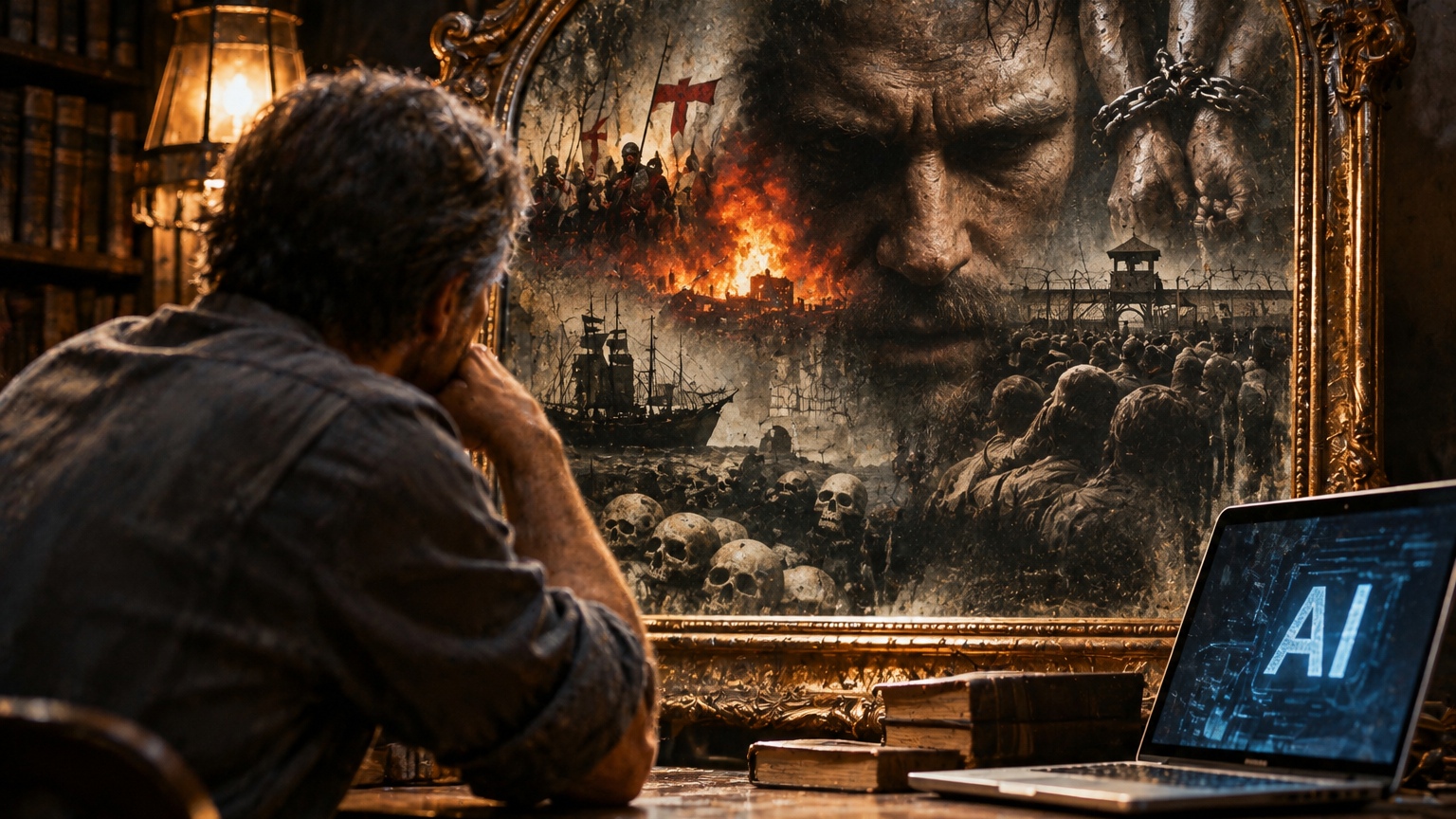
If only humans feared themselves as much as they fear AI.
That thought came to me while examining a series on SermonAudio entitled Surviving the AI Apocalypse. The series explores artificial intelligence, technological advancement, and how Christians should prepare for an increasingly uncertain future. The theological framework being developed begins with the dominion mandate in Genesis 1, humanity’s fall, and the restoration of dominion through Christ.
As I examined the first two installments, I found myself asking a rather fundamental question: What exactly does the dominion mandate have to do with artificial intelligence?
That question led to another question, and eventually to a much more uncomfortable realization. Perhaps the greatest problem with the Christian discussion surrounding artificial intelligence is not our understanding of technology. Perhaps it is our understanding of ourselves.
Consider some of the concerns being expressed about AI. We are afraid it will deceive people. We are afraid it will manipulate people. We are afraid it will exploit people. We are afraid it will spread misinformation, produce false teaching, and become an authority that people trust without question.
Those are legitimate concerns. But read that list again.
Deception. Manipulation. Exploitation. False teaching. The abuse of authority.
Does any of that sound particularly new?
Humanity has been doing all of those things for thousands of years. We didn’t need artificial intelligence to accomplish any of it. In fact, we have become extraordinarily proficient at all of it without the assistance of a single computer.
The biblical account of human history doesn’t begin with a warning about a technology humanity might eventually create. It begins with humanity itself rebelling against God.
By the time we reach Genesis 6:5, we encounter this devastating description:
And GOD saw that the wickedness of man was great in the earth, and that every imagination of the thoughts of his heart was only evil continually.
No artificial intelligence. No algorithms. No supercomputers. No social media.
Just humanity.
We had already managed to bring the world to a condition described as filled with violence and corruption. According to the biblical narrative, things had become so terrible that God brought judgment upon the earth through the Flood.
And what happens after the Flood? Genesis 8:21 tells us that the imagination of man’s heart is evil from his youth.
The Flood had come and gone. The fundamental human problem remained.
Perhaps we should spend a little more time thinking about that before we start discussing how to survive the AI apocalypse.
Jesus offers an equally uncomfortable diagnosis in Mark 7:21–23:
For from within, out of the heart of men, proceed evil thoughts, adulteries, fornications, murders, Thefts, covetousness, wickedness, deceit, lasciviousness, an evil eye, blasphemy, pride, foolishness: All these evil things come from within, and defile the man.
Notice where Jesus locates the problem. From within. Out of the human heart.
If artificial intelligence is used to deceive someone, the biblical prohibition against lying already exists. If artificial intelligence is used to exploit someone, the biblical condemnation of injustice already exists. If artificial intelligence is used to manipulate someone, the biblical demands of truth and love already exist. If artificial intelligence is used to produce false teaching, Scripture already gives us a framework for evaluating what is being taught.
But notice the wording of every one of those examples: If artificial intelligence is used.
Who is using it?
Human beings.
We keep talking about what artificial intelligence might do, and perhaps we should spend considerably more time talking about what human beings might do with artificial intelligence.
Artificial intelligence did not invent greed. It did not invent hatred. It did not invent racism. It did not invent the desire for power, the desire to control others, or the willingness to sacrifice other human beings for personal gain.
We managed to invent weapons capable of destroying civilization without generative AI. We enslaved entire populations without it. We committed genocide without it. We built political systems capable of manipulating millions of people without it. We developed propaganda, censorship, surveillance, and countless methods of exploiting human vulnerability without it.
And then there is Christianity.
This is where the discussion becomes particularly uncomfortable.
Christians are worried that artificial intelligence might produce false teaching. Has anyone examined the history of Christian theology? We have spent nearly two thousand years producing contradictory theological systems, condemning one another as heretics, dividing into countless denominations, and claiming divine authority for interpretations that cannot all be correct.
We did not need AI to create theological confusion.
Christians are worried that artificial intelligence might manipulate people. Yet the history of Christianity includes religious leaders manipulating people through fear, guilt, emotional pressure, and threats of divine judgment.
We did not need AI to manipulate people.
Christians are worried that artificial intelligence might become an authority that people trust without question. Yet how many Christians have been taught, directly or indirectly, that questioning their pastor is questioning God? How many have been discouraged from examining the claims of their religious tradition? How many have been told that the Holy Spirit has led their teacher to a particular interpretation, effectively making disagreement with that interpretation a disagreement with God?
We did not need AI to create unquestioned religious authority.
Christians are worried that artificial intelligence might confidently present false information as fact. I have spent countless hours listening to sermons. I have heard historical claims that were demonstrably false, interpretations that ignored the context of the biblical passage, arguments that violated basic principles of logic, and theological conclusions that bore little resemblance to what the text actually said.
In many cases, those claims were delivered with extraordinary confidence.
No artificial intelligence was involved.
And now imagine the irony of a pastor preaching a sermon warning his congregation about AI-generated misinformation while making inaccurate historical claims, misinterpreting Scripture, and presenting questionable conclusions as biblical truth.
Imagine someone using artificial intelligence to examine that sermon, check the historical claims, investigate the biblical context, and identify the logical problems.
Which one is the problem?
The human being who produced the misinformation or the artificial intelligence that helped someone discover it?
The presence or absence of artificial intelligence does not answer that question.
This is not an argument that AI is harmless. Artificial intelligence introduces genuine risks. Its speed, scale, and ability to automate complex tasks can magnify human wrongdoing in ways that deserve serious attention. Systems can also produce harmful and unpredictable outcomes that no individual specifically intended. A technology does not need to possess malicious intent to cause catastrophic harm.
We should investigate those risks. We should examine how these systems are developed, what objectives they are given, who controls them, and how they are deployed. We should demand accountability. We should be concerned about the concentration of technological power in the hands of corporations and governments.
But we should also recognize something rather important: a technology causing harm is not the same thing as a technology possessing a sinful nature.
A machine can malfunction. An algorithm can produce destructive results. An artificial intelligence system can generate false information without possessing the human intention to deceive. We must distinguish between technological risk and moral guilt.
And when we are discussing moral guilt, Christianity already has a doctrine that should dominate the conversation.
Human depravity.
Christians claim to believe that the human heart is deceitful above all things and desperately wicked. Christians claim to believe that humanity is fallen, that sin affects every aspect of human existence, and that our condition is so desperate that nothing less than the death of the Son of God was necessary to redeem us.
Yet when a new technology appears, we suddenly seem to locate the greatest threat somewhere outside ourselves.
Perhaps artificial intelligence is revealing something about the way we actually think about human depravity. We affirm it as a doctrine, but we frequently speak as if the real problem is something external. The world. The culture. Hollywood. Social media. The internet. And now artificial intelligence.
We keep identifying new things to fear while seemingly forgetting the biblical diagnosis of the human heart.
And that brings me back to the dominion mandate.
Even if we accept the argument that developing and managing technology is an expression of humanity’s dominion over creation, what does that actually resolve? The same human ingenuity that produces medical technology can produce weapons of mass destruction. The same intelligence that develops tools for education can develop tools for manipulation. The same technological advancement that helps someone investigate the truth can help someone manufacture a lie.
The dominion mandate does not eliminate human depravity.
Giving fallen human beings more power does not necessarily make them better human beings. It may simply give them more power to express what they already are.
Perhaps that is where the Christian discussion about artificial intelligence should begin.
Not with the assumption that Christians must reclaim dominion through technological preparedness. Not with an attempt to locate artificial intelligence somewhere within Genesis 1. Not with speculation about whether machines will eventually become more intelligent than their creators.
Perhaps we should begin with Genesis 3. With Genesis 6. With Mark 7. With Romans 3.
Perhaps we should begin with the biblical doctrine of humanity.
And perhaps we should recognize that the answer to human depravity is not technological advancement, technological restriction, or technological preparedness. None of those things can accomplish what Christianity claims humanity actually needs.
The gospel.
Artificial intelligence may become more powerful. It may become more persuasive. It may become more capable of performing tasks that once seemed uniquely human. It may bring tremendous benefits, and it may introduce dangers that we cannot yet fully comprehend.
But humanity’s fundamental problem will remain what it has always been.
We are sinners.
And the Christian hope is not that we will finally create a technology capable of overcoming our fallen condition. Nor is it that we will successfully control every technology that might expose or amplify that condition.
Our hope is Jesus Christ.
Perhaps the most frightening thing about artificial intelligence is not that it might become something completely unlike us.
Perhaps the most frightening thing is that it might become too much like us.
If only humans feared themselves as much as they fear AI.
Why Does Heaven Have to Pass Away?