Theology Central 2026: Year in Review
Theology Central 2026: A Year of Questions, Discovery, and Perseverance
Looking back at the journey so far — January 1 through November 9, 2026
As 2026 begins to draw toward its conclusion, it seems like an appropriate time to look back at the journey Theology Central has taken over the past ten months.
And what a journey it has been.
Hundreds of episodes, countless biblical passages examined, sermons reviewed, theological arguments challenged, historical controversies investigated, and new ideas developed. Along the way, there have been interpretations reconsidered, difficult questions that refused to go away, and discoveries that led us in directions we never anticipated.
Through it all, one central objective has remained: to understand what Scripture actually teaches.
This hasn’t been a year of simply repeating familiar theological conclusions. It has been a year of investigation, of wrestling with difficult texts, examining competing interpretations, and questioning popular Christian assumptions. Sometimes we discovered that the answers were considerably more complicated than we initially imagined.
And perhaps most importantly, it has been a year of continuing that work through some extremely difficult personal circumstances.
Hundreds of Episodes, Hundreds of Hours
The Theology Central SermonAudio archive for 2026 already extends across 23 pages, representing approximately 450 episode listings between January 1 and November 9.
That is an extraordinary amount of material to consider, especially when you remember that these are not generally five-minute devotional recordings.
Theology Central has always embraced long-form broadcasting. Most episodes extend beyond an hour, and some investigations require multiple broadcasts before a subject has even begun to receive adequate attention.
Behind those recordings are countless hours of reading, research, listening, preparation, and thinking. Sometimes an episode begins with a carefully planned biblical investigation. Other times it begins with a sermon, a theological article, a listener’s question, or a devotional that raises an interpretive problem.
And sometimes it begins with a question that simply refuses to go away.
The goal has never been to produce episodes according to some carefully calculated schedule designed to maximize downloads. The philosophy has remained much simpler: when there is something worth investigating, we investigate it. When there is something worth discussing, we go live. And when the investigation requires another episode, we continue.
That approach may not satisfy conventional podcasting advice, but it has helped produce an extensive theological archive that continues to grow.
One of the Year’s Greatest Accomplishments: The Five Layers of Reading Scripture
Perhaps one of the most meaningful developments of 2026 has been the creation and development of our Five Layers of Reading Scripture framework.
For years, Theology Central has emphasized the importance of context, careful observation, historical background, and distinguishing interpretation from application. During 2026, those concerns were brought together into a more organized and practical approach.
The Five Layers are:
Layer One: Boundary and Genre. Establish the boundaries of the passage and recognize the kind of literature being examined.
Layer Two: Voice and Occasion. Identify who is speaking, who is being addressed, and the historical circumstances surrounding the text.
Layer Three: Observation and Meaning. Examine what the passage actually says, how its argument develops, and what it communicates in context.
Layer Four: Canonical and Redemptive. Consider how the passage relates to the broader biblical canon and the unfolding work of redemption.
Layer Five: Application and Misuse. Determine what legitimate application can be made while identifying interpretations and applications that go beyond the text.
The individual principles are not new inventions. They belong to the long history of biblical interpretation. But organizing them into a repeatable framework gave Theology Central a valuable tool, and throughout 2026 we began putting that framework to work.
The Five Layers are not intended to guarantee perfect interpretation. They are intended to encourage disciplined interpretation, reminding us that before asking what a verse means to us, we must first ask what it meant in its original context.
I believe this may prove to be one of the most enduring developments of Theology Central’s work in 2026.
We Began the Year With Ruth, Hell, and Some Very Difficult Questions
Looking back at January, it is fascinating to see how many significant investigations were already underway.
The year began with an examination of Ruth. What does the narrative actually teach? What should we make of Naomi and Boaz? How should we interpret the actions and circumstances described in the story? Are we imposing theological meanings upon the narrative that the text itself does not establish?
The Ruth investigation became an opportunity to examine how biblical narratives should be interpreted.
At almost the same time, we were deeply involved in The Hell Question. The debate over eternal conscious punishment and annihilationism required us to examine competing arguments, individual biblical passages, and the assumptions underlying different theological positions.
The investigation included discussions of Kirk Cameron, sermon reviews, the language of destruction, eternal punishment, and the interpretation of difficult passages. We were not simply asking which position had the most supporters. We were asking what the biblical evidence actually established.
January also brought investigations into artificial intelligence, theological systems, and the danger of allowing a theological framework to replace careful attention to Scripture.
And all of this was happening while the broader Isaiah 40–55 project and other biblical investigations remained part of Theology Central’s work.
The year had barely begun, and the questions were already multiplying.
The Bible Remained at the Center of the Journey
Throughout 2026, Theology Central traveled through an enormous range of biblical material.
We examined Ruth, Isaiah, Jeremiah, Lamentations, Ezekiel, Psalms, Proverbs, Job, Matthew, Romans, Corinthians, Ephesians, Philippians, Timothy, James, Revelation, and many other passages.
Some investigations concentrated on entire biblical books or substantial sections. Others focused on a single verse, and sometimes that single verse opened the door to hours of investigation.
We explored Romans 6 and the believer’s relationship to sin, the demands of the Sermon on the Mount, the difficult language of Ephesians 5, and the meaning of obedience and God’s work in Philippians.
We examined the parables of Matthew 13, the identity of the people addressed by biblical promises, and Paul’s statement that Christ is the end of the law.
We investigated the suffering of Job, Paul’s circumstances in 2 Timothy 4, the promise of wisdom in James 1, and the identity of the one who possesses riches in Proverbs 8.
Again and again, the questions forced us to consider the historical setting, literary context, theological assumptions, and the difference between what Scripture actually says and what we have become accustomed to hearing.
These investigations demonstrate something important about Theology Central. The podcast has never been restricted to one theological subject. The Bible itself continually provides new questions and new directions to explore.
Theological Investigations That Became Major Projects
One of the fascinating characteristics of 2026 has been the way individual questions developed into extended projects.
The Hell Question became much more than a discussion of one controversial doctrine.
The examination of inspiration expanded into questions about the original manuscripts, copies of Scripture, textual variants, translation, and what Christians actually mean when they say the Bible is inspired.
The imputation investigations forced us to confront the distinction between righteousness credited to the believer and righteousness supposedly produced within the believer. The Romans 6 investigations raised significant questions about sanctification, sin, and the Christian life.
Our examination of spiritual warfare took us into William Gurnall’s The Christian in Complete Armor, the biblical language of spiritual armor, and the danger of building elaborate theological systems upon questionable interpretations.
The Psalms provided opportunities to examine suffering, prayer, hope, despair, and the relationship between biblical promises and the realities of human experience.
We also investigated the relationship between the Old and New Testaments, including whether Christians sometimes claim to find Christ in passages without adequately demonstrating how the text supports that conclusion.
Throughout these projects, we repeatedly returned to questions about justification, grace, assurance, holiness, and the sufficiency of Scripture.
Some investigations reached satisfying conclusions. Others produced additional questions, and some remain unfinished. But that is part of the nature of genuine theological investigation. Sometimes the most important discovery is realizing how much more work remains to be done.
The Sermon Reviews Became Investigations of Their Own
Another significant part of the year involved listening to and critically examining sermons.
At times, a single sermon became the starting point for several hours of additional study. A preacher would make a claim about a biblical passage, and we would stop to examine it.
We would investigate the text, consider the historical background, compare interpretations, and ask whether the conclusion was actually justified.
Sometimes we agreed. Sometimes we disagreed. Sometimes the issue proved far more complicated than either side initially suggested, and occasionally the investigation led us into an entirely different theological subject.
This approach has allowed Theology Central to engage with a wide range of Christian teaching while continually returning to the biblical text.
It has also reinforced an important conviction: no preacher, theological tradition, commentary, devotional writer, or podcast host should be treated as beyond examination.
That includes Theology Central.
Traveling Into Church History
The year also took us into important historical and theological controversies.
We examined questions surrounding the Reformation, Martin Luther, the theology of the cross, and the Heidelberg Disputation.
Our Reformation Day investigation developed into the multi-episode series Luther: Theology of the Cross. That project required us to distinguish between what Luther actually argued and what contemporary speakers sometimes claim he argued.
We examined the historical setting, the language of Luther’s theses, the theological issues involved, and the interpretation of controversial statements.
Other investigations brought us into questions of historical Christian doctrine, theological traditions, and the development of ideas that continue to influence churches today.
During 2026, there was also a significant personal development in my own journey through the Christian world: beginning to attend a Lutheran church after more than two decades of pastoral ministry in a Baptist congregation.
That experience has provided additional opportunities to think about Law and Gospel, liturgy, confession, absolution, and theological differences between Christian traditions.
The journey has not required abandoning questions. In many ways, it has provided new ones.
Theology Central and the World Around Us
Not every episode was devoted exclusively to a biblical passage or historical theological controversy.
Throughout the year, Theology Central also examined contemporary Christianity and the broader world.
We discussed artificial intelligence and its possible implications for the church. We examined Christian music, ministry controversies, political developments, devotional claims, church practices, and the ways Christianity is presented in contemporary media.
We asked whether Christians sometimes allow political identity to overshadow their identity in Christ. We questioned popular approaches to divine guidance and claims that God communicates private instructions beyond Scripture.
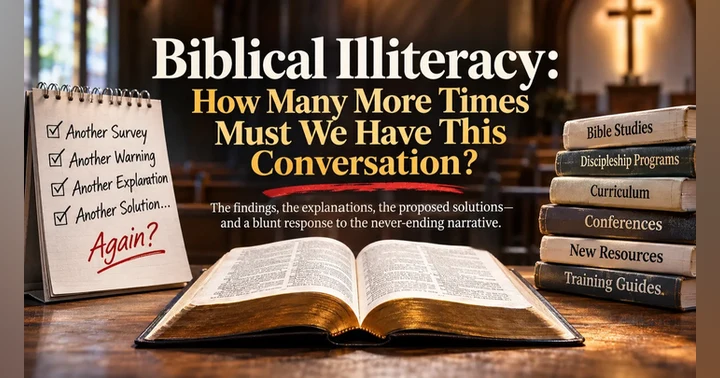
We examined the ongoing problem of biblical illiteracy and whether the Christian church has become too comfortable discussing the problem without adequately confronting it.
And we continued asking whether the Christianity being advertised, promoted, and celebrated always corresponds to the Christianity described in Scripture.
These investigations have been an important part of Theology Central’s identity. The goal has not been controversy for its own sake, but to bring theological questions into contact with the claims Christians encounter in everyday life.
A Year That Was Far From Easy
Any meaningful reflection on 2026 must acknowledge that this has been an extremely difficult year personally.
Serious and prolonged medical problems have created challenges that affected daily life, sleep, physical comfort, and the ability to record.
There were times when simply attempting to produce an episode became difficult. There were investigations I wanted to continue but struggled to return to, and subjects that required more preparation and concentration than I felt capable of giving them at the time.
There were occasions when a sermon review or a more spontaneous investigation seemed more manageable than resuming a major biblical series.
The difficulties did not disappear simply because a microphone was turned on.
In October, those circumstances became part of the context for our investigation of Job. That series was particularly meaningful because the questions surrounding suffering, pain, divine providence, and human explanations were no longer merely academic.
But I don’t want to turn this reflection into a story about overcoming adversity or portray myself as someone who somehow rose above every difficulty.
There were frustrating days, discouraging days, and days when things simply did not go the way I wanted.
There were episodes I wish had gone better. There were projects I wanted to finish and couldn’t. There were times when the physical difficulties made everything more complicated.
That was part of the reality of 2026.
And yet, somehow, through all of it, the microphone kept getting turned on, the questions kept coming, and the investigations continued.
Looking back, I am grateful for that.
The Journey Reached a Major Milestone
During 2026, Theology Central also crossed an important milestone: more than one million combined downloads and streams across its distribution platforms.
For a podcast built around long-form theological investigations, spontaneous broadcasting, difficult biblical questions, and a willingness to challenge popular interpretations, that is a remarkable development.
The podcast has never been designed around the latest advice about ideal episode length, release schedules, or maximizing audience engagement.
The episodes are often long. The subjects are sometimes obscure. The investigations can become complicated, and the conclusions are not always what listeners might expect.
Yet over the years, people have continued listening.
Of course, one million downloads and streams do not prove that the interpretations presented on Theology Central are correct. Popularity is not a measure of theological truth.
But the milestone does represent years of broadcasting, thousands of episodes, and an enormous investment of time and effort.
And it reminds me that the journey has extended far beyond the room where the recordings are made.
Two Websites, One Continuing Mission
November also brought another important development.
Theology Central established a clearer identity for two different websites.
TheologyCentral.org became the gateway into the SermonAudio ecosystem, providing access to broadcasts, series, live programming, and related resources.
TheologyCentral.net was redesigned as a gateway into the broader podcast ecosystem, helping listeners find Theology Central through their preferred podcast applications and platforms.
The two websites serve complementary purposes, and they provide new opportunities to make the growing archive more accessible.
Articles originally written for SermonAudio can be adapted into blog posts. Major theological investigations can be organized so new listeners can discover them more easily, and the enormous amount of material produced over the years can continue reaching people long after an individual broadcast ends.
What Have We Actually Accomplished?
Looking back over these ten months, it would be easy to become distracted by the number of episodes. But the real accomplishments extend beyond the count.
We developed and began applying the Five Layers of Reading Scripture. We undertook substantial investigations into major theological doctrines, explored difficult biblical books and passages, engaged with historical theology and the Reformation, and examined contemporary Christian teaching.
We continued developing a substantial archive of long-form biblical and theological material, reached a significant audience milestone, and improved the ways listeners can discover and access the podcast.
And we continued broadcasting during a year filled with significant personal challenges.
Perhaps most importantly, we continued asking questions.
We did not arrive at the end of every investigation with complete certainty. We did not solve every theological problem or finish every series, and we certainly did not produce hundreds of perfect episodes.
But perfection was never the promise.
Theology Central has often been described as a theological journey conducted in real time. The episodes are part of that journey, recording the questions, arguments, discoveries, disagreements, reconsiderations, and occasional frustrations that arise when someone is genuinely attempting to understand Scripture.
I frequently describe an interpretation as my hermeneutical hypothesis.
That language matters to me because it recognizes that an interpretation must be tested against the evidence of the text and that confidence should never be confused with infallibility.
The podcast is not a monument to having figured everything out.
It is a record of continuing to investigate.
How Might We Finish 2026?
As November continues and December approaches, there are still several weeks remaining in the year. There are also plenty of unfinished investigations and new questions waiting to be explored.
Perhaps we will return to one of the major biblical series that has been interrupted. Isaiah, Philippians, Romans, and the Psalms all offer opportunities for continued study.
Perhaps we will devote additional time to the Five Layers, demonstrating how the framework can be applied to difficult passages and how it can help identify common interpretive mistakes.
We may continue investigating justification, sanctification, assurance, inspiration, or the theology of the cross. There are certainly enough unresolved questions from our earlier broadcasts to keep us occupied for quite some time.
I also think there could be value in an episode devoted to some of the most important questions we encountered during 2026 that remain unanswered.
Or perhaps something entirely unexpected will capture our attention and lead to another investigation. That has happened many times before.
There is also the possibility of ending the year with a special broadcast reflecting on what we learned, what surprised us, what challenged us, and which questions deserve further attention.
But I don’t want to manufacture a dramatic conclusion simply because December 31 appears on the calendar.
The calendar provides a convenient opportunity for reflection. It does not determine when a theological investigation is finished, and there is no reason to believe that every unfinished project must be completed before January 1.
We will continue investigating when there is something worth investigating, and we will go live when there is something worth discussing.
The journey will continue.
A Final Reflection — And a Heartfelt Thank You
As I look back over Theology Central’s 2026, I see a year filled with biblical investigation, theological discovery, difficult questions, historical exploration, and an extraordinary amount of broadcasting.
I also see a year marked by personal difficulties, interrupted plans, and challenges that could not have been anticipated when January began.
There are episodes I am pleased with and episodes I wish I could revisit. There are interpretations I remain convinced are correct, questions I am still wrestling with, and subjects I have barely begun to explore.
That is the reality of Theology Central. It is not a carefully scripted presentation of a completed theological system. It is a continuing journey through Scripture, theology, church history, and the complicated realities of life.
But before bringing this reflection to a conclusion, there is something I want to say that may be more important than anything else in this article.
Thank you.
To everyone who has been part of the Theology Central journey, whether you’ve listened for years or discovered the podcast only recently, I want you to know how genuinely grateful I am.
You have given me something that is difficult to fully express in words.
You have given me someone to talk to.
I realize that may sound strange when describing a podcast, particularly one where I am often sitting alone in a room, speaking into a microphone without knowing whether anyone is listening at that particular moment.
But that is the reality of what this podcast has meant to me.
There have been so many nights when I have turned on the microphone at one or two in the morning, opened my Bible, gathered my notes, and started talking.
Sometimes I have been excited about a discovery. Sometimes I have been frustrated by a theological argument. Sometimes I have been wrestling with a passage I simply could not understand. And sometimes, especially during this difficult year, I have been physically exhausted, discouraged, or dealing with circumstances I would never have chosen.
Yet there was still something meaningful about turning on that microphone and sharing the questions, the thoughts, the struggles, and the discoveries.
And knowing that somewhere, whether at that very moment or hours, days, or even months later, someone might be listening has meant more than I can adequately explain.
In a very real sense, you have allowed me to share this journey with someone rather than simply keeping all these questions and thoughts to myself.
For that, I am deeply thankful.
I also want to thank everyone who has taken the time to send an encouraging message, write a kind email, leave a positive comment, or post a thoughtful review.
You may not realize how much those things matter.
When you spend so much time speaking into a microphone, you don’t always know what happens after an episode is published. You don’t know whether something you said helped someone think through a difficult passage, encouraged them to open their Bible, or simply gave them something worthwhile to consider.
And then occasionally a message arrives.
Someone shares that they’ve been listening. Someone mentions an episode that meant something to them. Someone offers a few words of encouragement or simply lets me know that the work is appreciated.
Those moments matter, especially during difficult times.
I am also profoundly grateful to everyone who has supported Theology Central financially.
Your generosity has helped make this podcast possible. It has helped sustain the platforms, services, and resources necessary to keep the broadcasts available and the work continuing.
I never want to take that support for granted. Every contribution represents someone choosing to help make this work possible, and I am genuinely thankful for that kindness and generosity.
And to those who have listened quietly without ever sending a message, leaving a review, or contributing financially, please understand that my gratitude extends equally to you.
You may never know how much it means simply to know that someone is willing to spend an hour, sometimes much longer, listening to me work through a biblical passage, wrestle with a theological question, or attempt to understand something that has been troubling me.
There is something deeply personal about that.
Especially when I think about the many late nights, the countless hours, and the difficult days of 2026, I find myself realizing that Theology Central has given me an opportunity to share a part of my life with people I may never meet.
And you have made that possible by being willing to listen.
I don’t know exactly what the remaining weeks of 2026 will bring. I don’t know which biblical passage will capture my attention tomorrow, which theological question will refuse to go away, or which unexpected subject might send us down another investigative path.
I certainly don’t know what 2027 will hold.
But I do know that I am grateful for the opportunity to continue this journey, and I am grateful that so many of you have chosen to be part of it.
So as we look back at hundreds of episodes, countless hours of broadcasting, theological investigations, new projects, personal challenges, and significant milestones, I want to end with something very simple.
Thank you for listening.
Thank you for your encouragement.
Thank you for your kindness.
Thank you for your prayers, your comments, your reviews, and your financial support.
And perhaps most personally, thank you for giving me someone to talk to, even at one or two in the morning, when the room is quiet, the microphone is on, and another theological investigation is about to begin.
Thank you for being part of the Theology Central journey.
It means more to me than you may ever know.
Theology Central — November 2026